Sunday, December 13, 2015


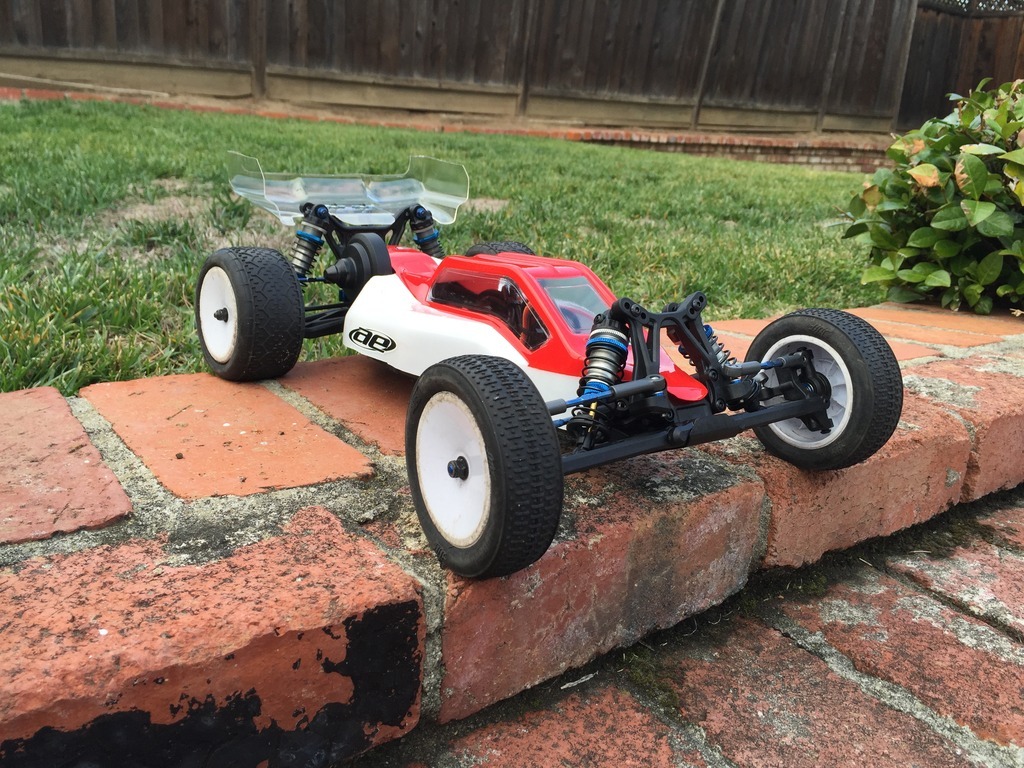
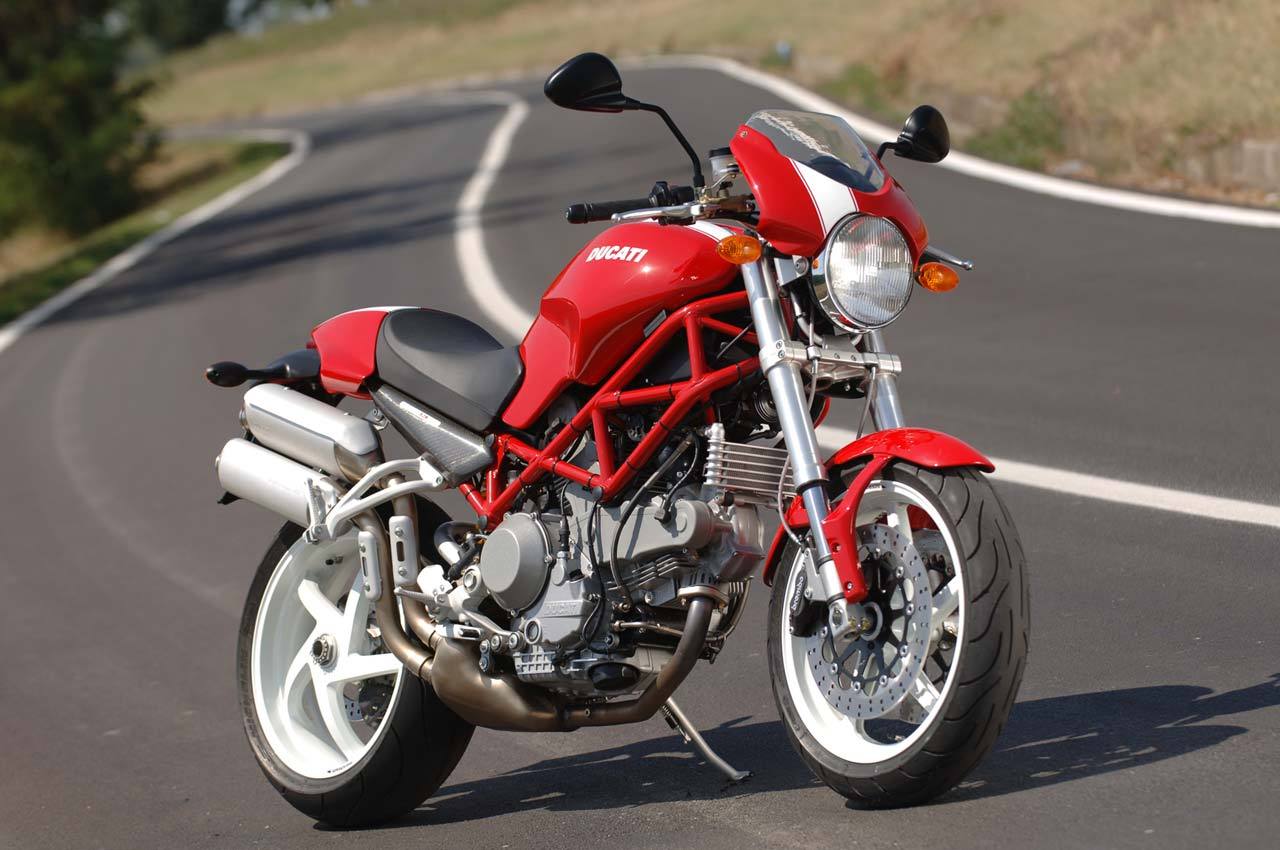
The paint scheme I’ve been using for all of my race cars pays homage to my favorite motorcycle of all time, the Ducati Monster S2R1000.  I never owned one, but always wanted to get one.

Team Associated B5M Factory Lite review

image

Time for another review.

Those of you who have been following my blog know I purchased a B5M Factory Lite recently and started racing it.  I’ve had about 15-20 batteries through it and feel I have enough information to do a full review, so here it is.

Overview

The B5M has been out for a couple of years now, and won a bunch of races and is the successor to the very popular B4.2.  Team Associated came out with two versions of the car, the B5 (rear motor) and the B5M (mid-motor).  Probably 90% of sales were for the B5M, and since its release they updated it to the B5M Factory Lite.

The Factory Lite (FL) is targeted primarily at 17.5 stock racers, and features some nice improvements over the original B5M to lighten it – titanium turnbuckles, aluminum front hexes, V2 slipper, 3-gear transmission, and a milled chassis.  It also has an aluminum rear camber block, which is an improvement over the original plastic one.

It also features the B5 arms (flat front arms, B5 rear arms) which smoothens out the steering and makes it a little quicker turning.  It’s basically the best of everything.

I built mine up as a stock spec 17.5 buggy, using completely kit parts except for V2 shock shafts/pistons and X-rings.  Fully ready-to-run, it weighs in at 1525 grams.

Build: 10

The build went very nicely.  I was familiar with the platform, having built a B5, but after going through a Losi/TLR phase, it was surprisingly refreshing to build an AE kit.  AE kits are definitely well thought out, the instructions are clear, and I feel like the plastics and screws are of slightly higher quality than TLR kits.  The plastics are a little firmer and easier to properly thread screws, and the screws are a little sharper and more durable in my opinion.  No issues with the build, it went together perfectly.

Performance: 10

The car just plain kicks ass.  With some decent electronics, the buggy rips.  It handles predictably, it jumps neutrally, it accelerates and brakes well.  I find it to drive very well out of the box with the kit setup.  I think the only thing I changed was dropping 1mm on the rear camber block, else it’s a completely stock setup.

There is less forward and rear weight shift as compared to my B5, and it definitely corners flatter and with more speed.  With the B5, you can feel the rear end swing around in the corners.  It doesn’t plant the rear tires down as much as the B5 – the B5 definitely drives better in slick conditions, but in high-bite there is no comparison.  I’m probably 0.5 seconds/lap faster (on a 16s indoor track) with the B5M.

The shocks are not quite as smooth as TLR 22 shocks, but they work just fine for me.

The car is also extremely light – it has the factory team bearings and weighs only 25 grams over ROAR minimum, and this contributes to the amazing acceleration of the car.

Durability: 9

With the B5, I did break a few parts – front shock shaft, front A-arm, front turnbuckle, rear hubs, but on the B5M FL all of those parts have been upgraded/redesigned. 

It’s got titanium turnbuckles, a redesigned rear hub (longer ball stud with a nut and washer), and I’m using V2 titanium-nitride shafts.  The car isn’t unbreakable, but so far I haven’t broken anything on my B5M FL.  I’ve done some gnarly cartwheels and lawn darts, but it’s held up great.  Even the wing has taken some solid abuse and still looks OK.

It could be that the lighter car makes it a little more durable, but my B5 was only 40 grams or so heavier.

Value: 10

At $279, the buggy is basically the cheapest race buggy on the market.  Considering what it comes with, it’s really the best deal out there.  You have aluminum shock bodies, titanium turnbuckles, a hard-anodized milled chassis, aluminum hexes front and rear, wow.  The TLR 22 costs $60 more, the Kyosho is $100 more, and the Euro cars are expensive also.  Yes, you don’t get wheels, but the price is low, low… low!

Support: 10

AE customer is great, and there are more setup sheets and team drivers for AE than any other brand.  Probably more than all other brands combined!  I’ve gotten quick responses via e-mail from their support staff, and there is a lot of info online and on AE’s website on improving your car.

Dislikes

I honestly can’t think of anything.  It’s not as smooth driving as the TLR 22 2.0, but I like the aggressive nature of the car.  About the only thing that’s annoying about the car is that you need to glue in the front hub inserts, else they tend to get sloppy.  But it only takes a couple of minutes and everyone uses 4mm of trail, so it’s not a big deal.

Conclusion

The car drives awesome, it’s cheap, and it has the best support.  If
you’re not a brand-o-phile, you really can’t go wrong with the B5M
Factory Lite.  The only problem you’ll have is that the car is so
good, everyone at your local track will have one!

At the time of this post, the TLR 22 3.0 just came out and from what I’ve seen of it at the track, it looks as good as the B5M FL, if not better.  I’m going to have to get my hands on one eventually, but for now I’m having so much fun with the B5M it may be a while.

First 17.5 Sportsman race

Graduated from rookie class into Sportsman, and first race with the 17.5 B5M Factory Lite, and I qualified into the Expert A-main!  Pretty crazy.  12 Experts and 4 Sportsmen, and I qualified as the 6th Expert overall.  They bumped me into Expert because of my times.

Finished 8th in the race (out of 8), but was pretty psyched just to make the Expert A-main.  Fastest time of 15.05, beating my previous 15.1.

This buggy just plain kicks butt.  I’m running completely out of the box kit with no extra parts.  Insane.

Friday, December 4, 2015

This thing rips!

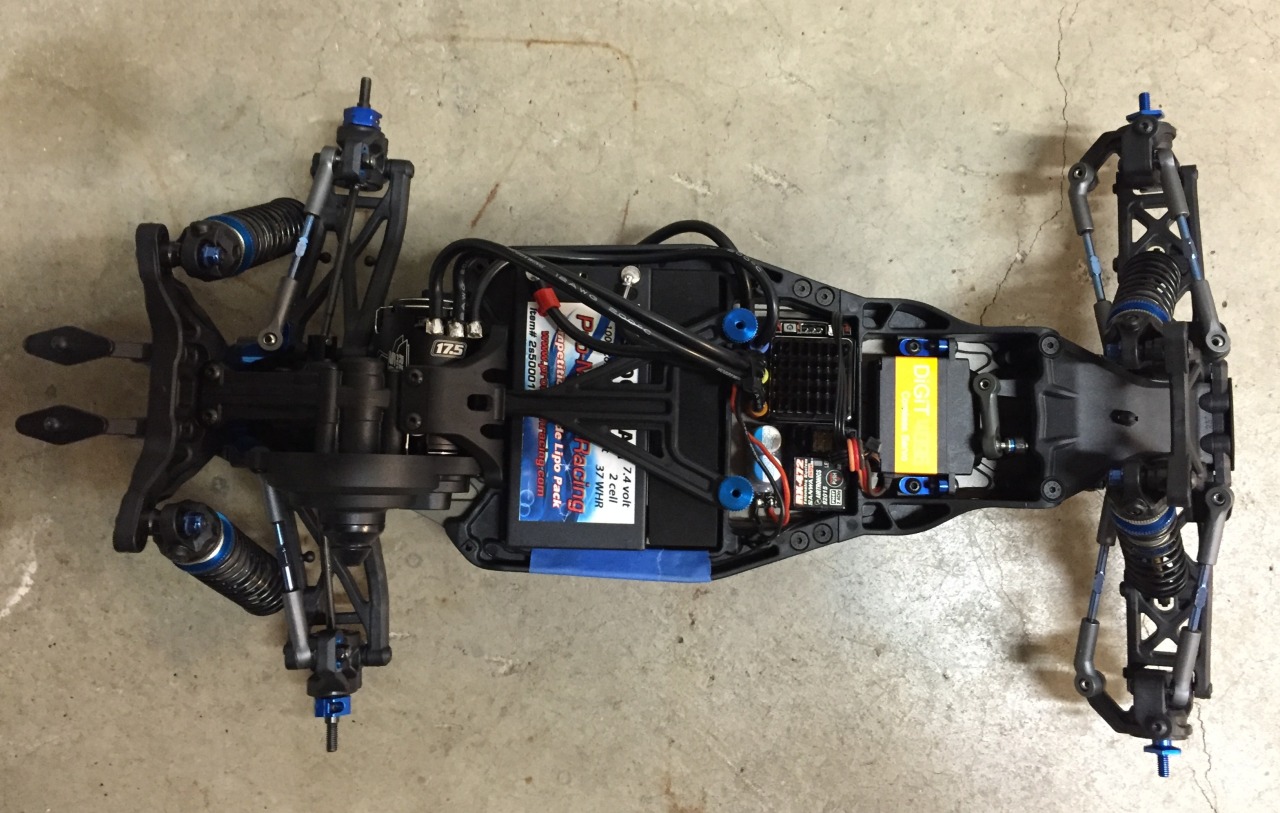
I did some more practice with the B5M lite, and with the current electronics it’s pretty freakin’ fast for a 17.5.  I’ve got a 17.5 Reedy M3 short stack, Hobbywing V3.1 Stock Spec, and Pro-match 100C 5000mah shorty in there, and it rips pretty good.  There are faster cars out there, but this thing is pretty good for $250 in electronics.

Nothing else special on the car, just some Avid metal shielded bearings and v2 AE pistons, otherwise it’s completely stock.

I’m having a lot of fun with this car, definitely want to see what my times are the next time I go out to the track.

I will say that this car is pretty sensitive to changes.  I was running 22mm rear ride height, and it drove pretty terrible.  Bumping back up to 24mm and it was on rails.
Monday, November 23, 2015


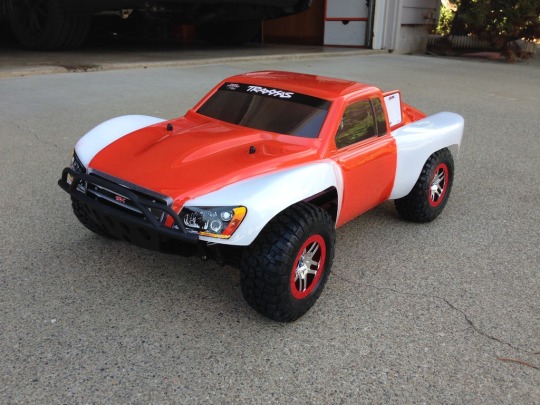
Painted and ready to rock!

Traxxas Slash 4x4 Platinum Edition review


image

[Please excuse this super-ugly paintjob, it was the first RC car I painted]

I’m going to change things up a little bit and try to have a more formalized approach to reviews.  Hopefully this reads a little better and is a little bit more of a standardized and comprehensible way to read my thoughts on the car.

My first RC car was a Stampede 4x4, which is a close cousin of the Slash.  Most of the parts between the two cars are interchangeable.  The Stampede was good, but I started driving primarily on an indoor track, and it was not really the right vehicle for that environment.  So I decided to go more “kit” and the Slash 4x4 was an easy choice.  The Platinum edition is really the best version to get (there are probably like 10 different versions of the Slash 4x4) in my opinion, because you get everything you need, and nothing you don’t.  You get all the hop-ups of the Ultimate Edition (aluminum carriers, center diff, GTR shocks, LCG chassis), but you don’t pay extra for the basic radio and useless battery/charger, and you get a body you can paint yourself. 

The Traxxas Slash 4x4 is the most popular hobby-grade RC car on the market.  The Slash, in particular, launched an entire segment of vehicle (short course truck) that persists today.  After the success of the Slash, every major manufacturer came out with their competing product, both in 2WD and 4WD format.

Traxxas themselves came out with a host of 4x4′s based on this design, including the Stampede 4x4, the Rally, the XO-1, and of course the Slash 4x4.


Overview

The Slash 4x4 is probably the most versatile RC car available.  You can bash the car, you can make it a road car, turn it into a monster truck, you can race it, you can go indoor, outdoor, in the snow, even turn it into a…  boat ?!!?!?!


In addition to being versatile, the car is very newbie-friendly.  This is true of Traxxas cars in general, which are targeted to the more casual driver/less hardcore RC enthusiast.


Build:  N/A

Ha!  There is no build, this car comes Ready-to-Run (RTR).  Ok, well, almost ready-to-run, the Platinum edition requires a radio, receiver, a battery and some paint, but it’s 90% complete.  I chose to pair the car with a Futaba 3PL which is a much better radio than the Traxxas TQi that comes with the other Slashes.


Performance:  5

The Slash is kind of a basic car, with basic adjustments you can make.  There are 3 holes of shock tower mounts, 4 holes of camber link adjustments on the tower, and the standard set of adjustments you can make with camber and steering links.  Out of the box, the Velineon system is plenty fast on 2S, and you can go to 3S if you want.

However, it’s not really a race-level car.  The kit stuff is OK (plastic LCG chassis, GTR aluminum shocks), and with some basic setup of camber and roll centers and tires it drives reasonably well.  The stock tires are pretty sticky for pavement, but not really that great otherwise.  It tends to nose-dive off jumps.  Cornering is actually one of its stronger points, and is tunable with springs and swaybars to get as much or as little rotation as you want.

The 4WD system works pretty well.  With the 3 diffs (center, front and rear) and slipper clutch, you can tune as much or as little power transfer as works for you.  This car has pretty good traction, and tunable traction as well.

The shocks on this car are decent – they don’t have the smoothness of race-grade shocks (when compared to TLR or Tekno shocks).  But they will work fine for 95% of people and are very durable.

Probably the only kit part that sucks is the servo.  It’s plastic, it’s weak, it’s slow -- it’s a $20 part that really should be tossed for a faster, stronger one.  The servo saver protects it, but once you get a stronger servo you'll want to look into getting a stronger servo saver as it tends to give in high-traction situations.

Overall it's a solid performer, one of the better RTR's, but not at the level of the race kits.


Durability: 8

This is the strongest point of the car.  Traxxas cars are known for being bash-friendly, mainly because the cars are very tough.  I let my sons drive my car all the time, and while things do break, the cars go through a LOT and I find the plastics to have just the right balance of flex for durability and stiffness for performance.  Ask anyone, and you would be hard-pressed to find a tougher car.  Stuff does break if you slam into walls or crash into the face of jumps, but considering the amount of abuse these cars tend to take, I give the durability high marks.

The only weak part of the drivetrain is that the gear diffs tend to leak through the outdrives.  LEM o-rings are a nice upgrade that are more durable.


Value:  7

Traxxas cars are not cheap, in fact they tend to be some of the most expensive RTR cars you can buy.  The Slash 4x4 Platinum costs $400.  But considering it comes with a solid ESC and motor, that’s not a bad price.


Support:  10

This is another area where the car shines.  The customer service for this car is excellent.  Even if you burn out your ESC or motor, they will usually swap it out for a smallish trade-in fee.  I don’t know if there is another manufacturer that has more support than Traxxas.

The aftermarket parts for this car is also phenomenal.  You can literally change out every single part on this car for an aftermarket part if you want.

Traxxas parts are also the most heavily stocked items in the country, pretty much every local hobby store will have the most common parts, which is nice when you break an A-arm and want to go driving again that day.


Dislikes

As mentioned earlier, the servo pretty much sucks.  The hinge pins on the left arms also tend to back out which is annoying.  This is easily fixed with STRC or Lunsford parts, but you would think that would’ve come up with a solution by now.

I can’t really complain about much else about the car.  The car is a little vague when compared to race cars, but that’s intrinsic to the use of softer plastics that are more durable.  The chassis also has a little too much flex – I fixed that with a chassis brace.


Conclusion

The Slash 4x4 is a great first RC car.  It’s very newbie friendly, it’s easy to get parts, it’s very durable, and you can always modify the car to your liking.  It worked out so well for me, I ended up converting my Stampede 4x4 to a Slash 4x4 to have as a backup.

Highly recommended unless you are looking for a true race/track car.

Saturday, November 21, 2015


Finished the B5M lite!  Took me about 5 days, and still need to paint, but the car is pretty much done.  I’m improving on my soldering skills too, so the wiring on this car is actually semi-decent.